
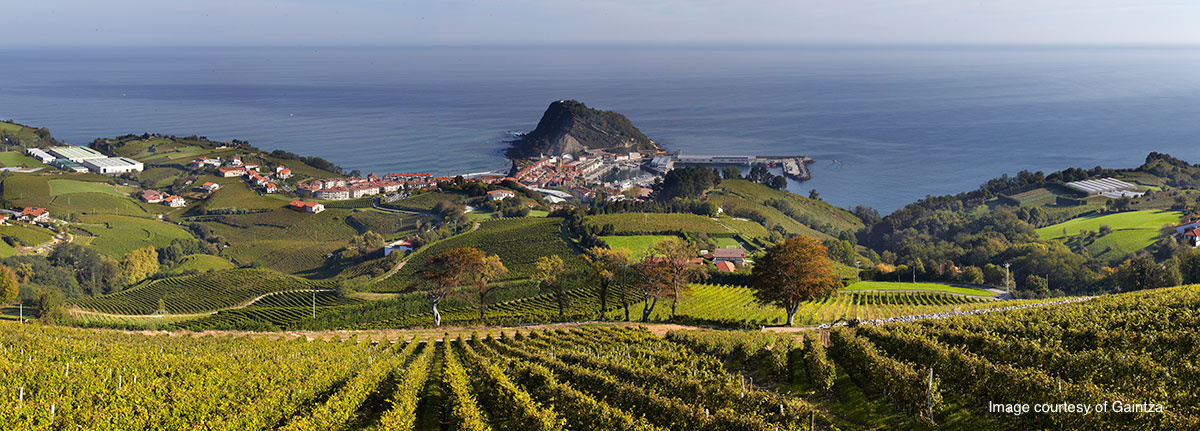
Gaintza Txakolina 2021, Getariako Txakolina, Spanish Basque country $22.99
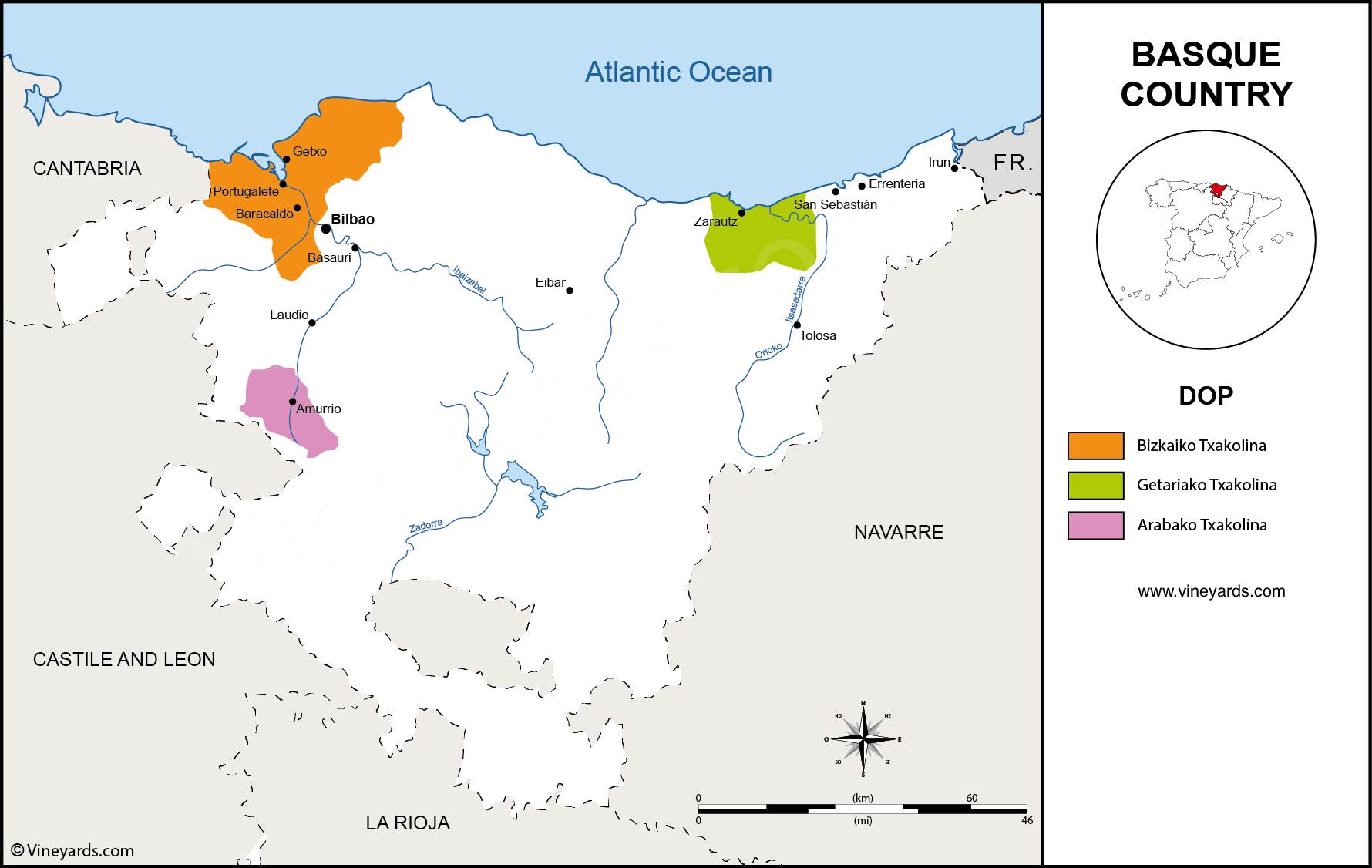
Txakoli comes from the Basque country on the cool, verdant Atlantic coast of northern Spain, stretching from the border with Portugal to the border with France; this area, which includes Basque Country, Cantabria, Asturias, and Galicia, is in fact so verdant that it’s referred to as Green Spain–or España Verde. The coastal route starts and finishes near two major international airports, Bilbao and Santiago de Compostela, should you want to make travel plans. This area may be green, but this strip of country facing the Bay of Biscay is also densely populated, heavily industrialized, and not usually associated with wine production. The area's sandy beaches attract surfers and tourists, while the Basque region’s abundance of Michelin-starred restaurants draws millions of destination diners each year. A century ago, though, before phylloxera ravaged the region, over 1000 hectares of vines stretched along the coast, where farming was a struggle then just as it is now; the cool summers and annual rainfall of nearly 60” aren’t necessarily conducive to healthy vines. Nevertheless, there are many farmers within the tiny Getariako Txakolina appellation who have proudly/stubbornly refused to give in to the elements, who have increased the total vineyard area on the rocky Biscay coast, and who have ushered in a vast and welcome improvement in quality since the 1990s.
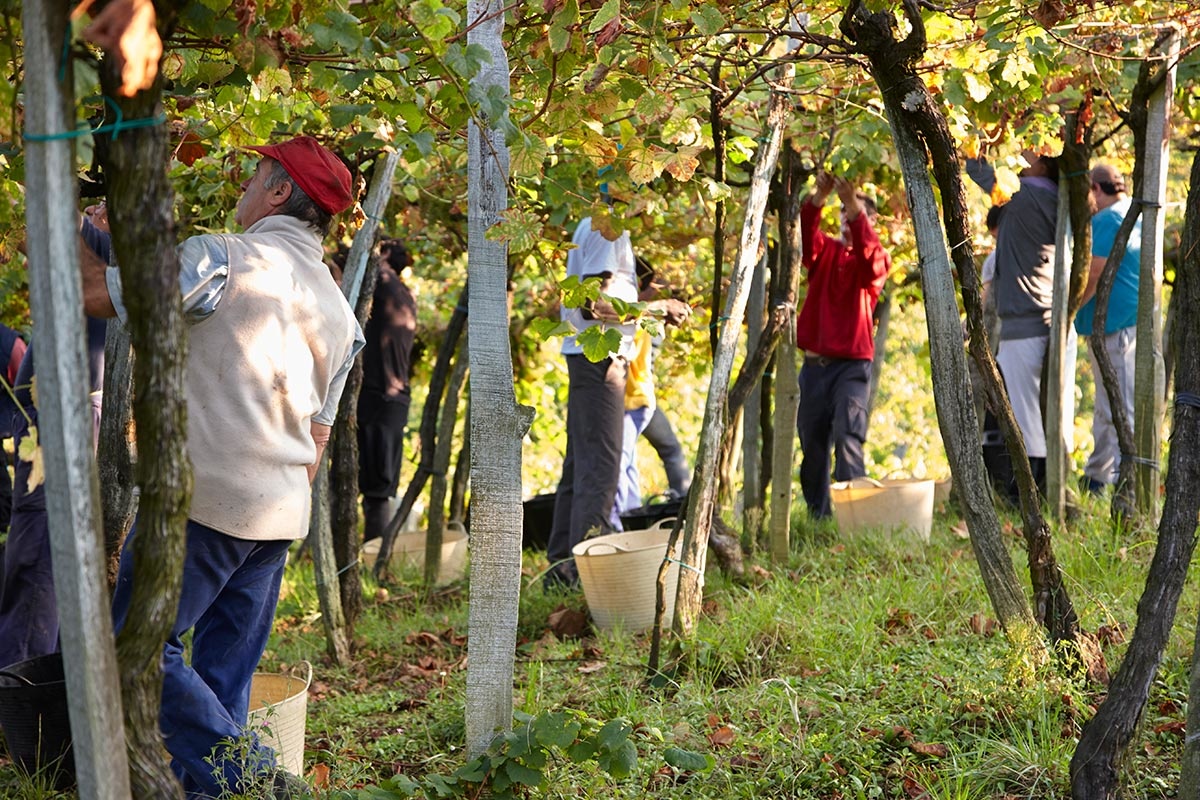
The Lazkano family has been farming their small vineyard plots around their rural stone house and cellar—known as a caserío—for over a century. The Gaintza estate and winery was founded by Andrés Lazkano in 1923 but the wine was made mostly for home consumption, with the small amounts of leftovers sold directly from his farmhouse to neighboring villages. The winery has expanded since then to include a guesthouse and tasting room on their 25 hectares. It’s run by the 4th generation of Lazkanos, brothers Joseba and Urtzi. Joseba and his mother handle the winemaking while Urtzi manages the family’s 23 ha of sustainably farmed, pergola-trained vineyards. All of them are focused intensely on this small region and its potential for its native varietals.
Like Portugal’s Vinho Verde, Txakolina (or Txakoli) is strongly influenced by the Atlantic and is usually sold young, with low alcohol, and a slight spritz. The wines also have some salty/tangy resemblance to another Atlantic star, France’s Muscadet. The whites here are made primarily from the high-trained Hondaraibi Zuri grape although some French varieties can be found here too; Hondarrabi Beltza makes light reds, mostly (though not always) for local consumption.
Gaintza Txakolina is 85% indigenous Hondarrabi Zuri, and 15% maritime variety Gros Manseng from sustainably farmed vines planted in 1978 on clay and limestone soils, at 75m (246 ft) elevation. It’s fermented slowly, over 45 days, in stainless steel, then aged for 8 months on the lees. This is a classic Getaria-style Txakolina, with refreshing acidity and light effervescence from the natural fermentation finished in the bottle. It’s lean and zesty with lots of lemons, limes, garden herbs, and saline briskness. This is a bit of a wait-for-it wine, as the mouthwatering acidity really hits a bit late and at the back of the tongue. Then it’s dive right in for another sip! Have this wine as an aperitif or with olives, ceviches, anchovies, garlicky shrimp, just about any fried seafood. It’s really a perfect wine for the heat of summer, or if you’re not quite ready to let summer go…
Here's a recipe for Marmitaka, or Basque tuna stew. While it's more of a fall/winter dish, a zippy txakoli would cut right through the richness. Here's a site with a bunch of Basque recipes, but if you're not a fan of seafood, the options are slim. There are some interesting desserts though, like Apple Tart with Thyme Custard.
La Antigua Rioja Clásico Reserva 2012, Spain $30
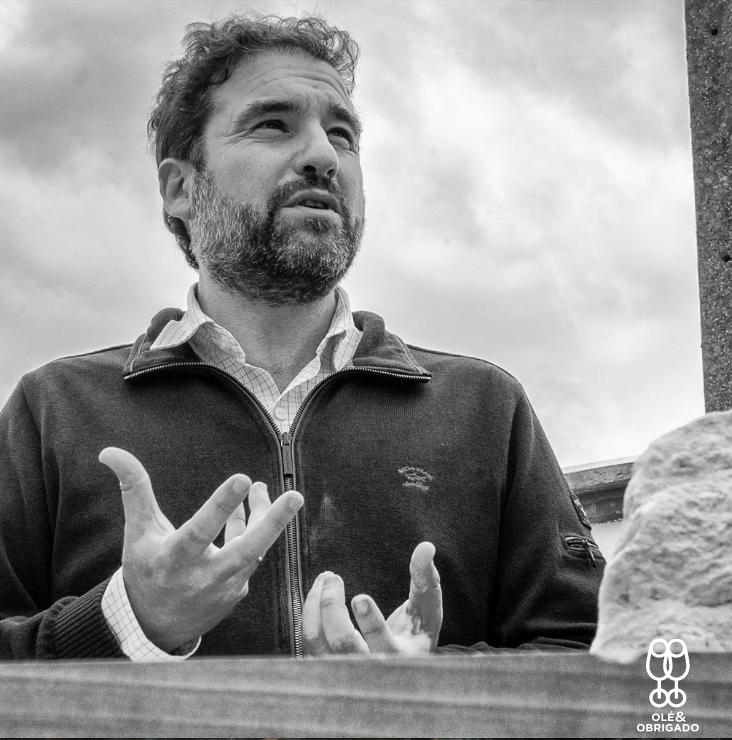
La Antigua Rioja is just one of many wines produced by Madrid-born Alberto Orte. Back in 1999, while still in college, Alberto and his friend Patrick Mata partnered to form Olé Imports, which became Olé & Obrigado. Both Alberto and Patrick are from families that have been making wine in Spain since the 1800s, so of course the first wines they sold in the U.S. were from Alberto’s family in Montilla, in southern Spain. The two still share duties, with Alberto handling the selection of wines and winemaking in Spain, and Patrick managing the commercial and marketing part of the business in the states.
Alberto has dedicated much of his life to discovering great Spanish terroirs, and rescuing and replanting ancient and nearly extinct varieties that would otherwise be lost. In Jerez alone, Alberto has identified 200+ old clones and 22 forgotten varieties. He produces wine in many regions throughout the Iberian Peninsula, most notably in Jerez, Valdeorras, and Rioja, and tends to favor high-altitude plots with deep soils. He has a passion for old vines, as the lower yields lead to more concentrated and complex flavors in the fruit. He produces two types of wines: wines of unique terroirs, which are labeled as Alberto Orte, and wines from village- designated vineyards that are more approachable, and are labeled as Vinos Atlántico. Today, Alberto owns 16 hectares of vines in Jerez and rents vineyard sites or purchases fruit in the Sil and Bibei riverbanks Valdeorras, Campo Arriba in Yecla, and Sierra de la Demanda in Rioja.
Alberto is serious about organic farming, using beneficial cover crops like clover in the vineyards, and surrounding them with naturally pest-repellant hedges of rosemary. He experiments with biodynamic principles in some of his vineyards, finding that they come alive with worms, pollinators, and other flora and fauna. He uses dry farming techniques instead of irrigation, which is vital in drought-prone areas across Spain. And his new winery at El Aljibe (Cádiz) is powered by geothermal energy; inside the winery itself, he uses an organic approach, allowing the fruit and terroir to shine through in the final product, unmarked by adjustments and chemicals.
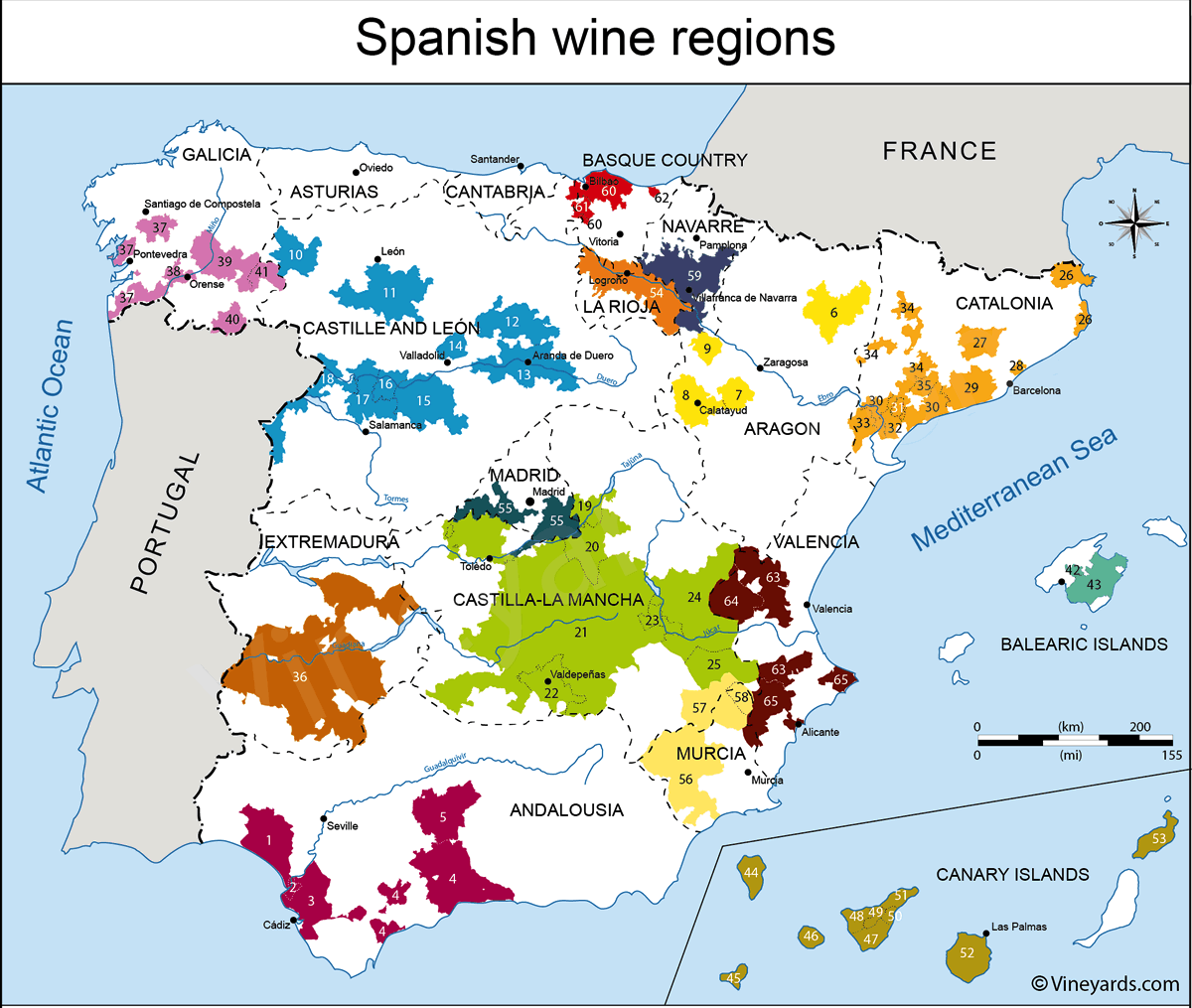
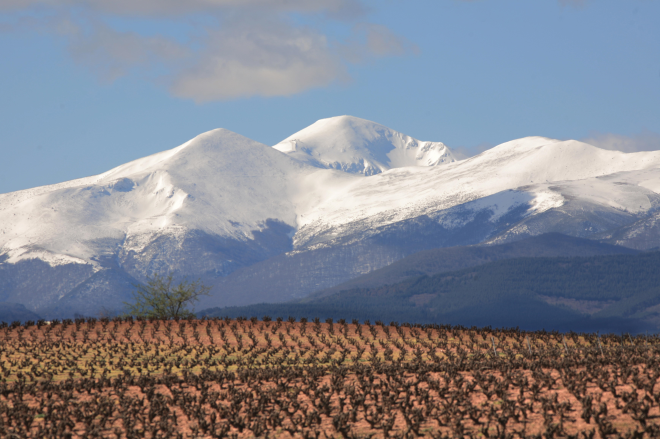
La Antigua Clásico shows off the cool-climate, western mountain range of Sierra de la Demanda, a largely unexplored region south of the Ebro river in Rioja Alta. The vineyards here are sparsely scattered and extremely steep, making the terrain impossible to mechanize, thus all work must be done by hand. The north-facing, high-altitude vineyards also receive far less sunshine than those in the valley, so the grapes ripen slowly and are amongst the last to be harvested in all of western Europe; sometimes harvest doesn’t happen until early November. All of these factors, combined with Alberto’s winemaking style that harkens back to the early 20th century, come together to create wines of intense flavor, focus, and freshness, which lead to balanced, age-worthy wines.
With La Antigua Rioja Clasico Reserva, Alberto has brought together old-vine Garnacha (60%), Tempranillo (30%), and Graciano (10%) planted between 1940 and 1955. The vines grow in red silica sandy soils (which is rare in Rioja) at 700 m (2,296 ft) elevation. After vinfication with native yeast, the wine ages for 6 years in 60% French and 40% American oak barrels, 2 years in stainless, then 10 months in bottle.
This wine is beautiful right out of the bottle although decanting would likely allow it to reveal its secrets even sooner. On the nose the tertiary aromas get you first, like leather, tobacco, mushrooms, wet leaves, and just a touch of game. But with some air ripe raspberry and cherry flavors become more apparent, as do the many floral notes. The wine never loses its fresh and energetic character, and the long, fruit-forward finish is enveloped by fine, well-integrated tannins.
Here is Alberto’s recipe to go along with this wine. We can’t wait to try it. Let us know when you do! Apologies to vegetarians…perhaps the next recipe will be meat-free. Although Soy Chorizo really isn’t too bad.
PATATAS A LA RIOJANA
Alberto Orte
This recipe is for a 5# bag of potatoes, which will provide a hearty meal for 4 people with some leftovers if eaten as the main course, or twice that many as a side. Adjust accordingly.
5 lb bag of yukon gold potatoes (russets don’t work for this recipe - needs to be a waxy-style potato)
~2.5 cups of sliced spanish-style chorizo.
One large sweet onion, sliced thinly
4-5 cloves of garlic, peeled and sliced thinly
Generous pinch of saffron.
1 tbsp of spanish smoked paprika.
Water or chicken stock to cover (I use a quart of chicken stock and cover with water, but you can go 100% water; there’s plenty to flavor the broth in this dish)
Bay leaf and sprig thyme, bound in a bundle with twine
Salt and pepper
In a heavy bottomed pot over medium-high heat, saute chorizo until it renders some of its fat and begins to cook.
Add onion and garlic, stir to combine; cook until softened and shiny
In a mortar and pestle (or with your fingers if you don’t have one), gently grind saffron to break it up a little, and add to pan, along with pimenton. Stir to combine.
Add potatoes, stir to coat.
Add water/stock to cover, add herb bundle and season with salt and pepper, bring to a simmer.
Cook until potatoes are tender and beginning to fall apart, about 30-45 mins. Taste every 15 mins for salt - potatoes LOOOOOVE salt and you’ll need more than you think.
Allow to rest for 15-20 mins before eating - this is a dish that is VERY much improved with some time - it’ll be incredibly complex the next day if you have leftovers!