
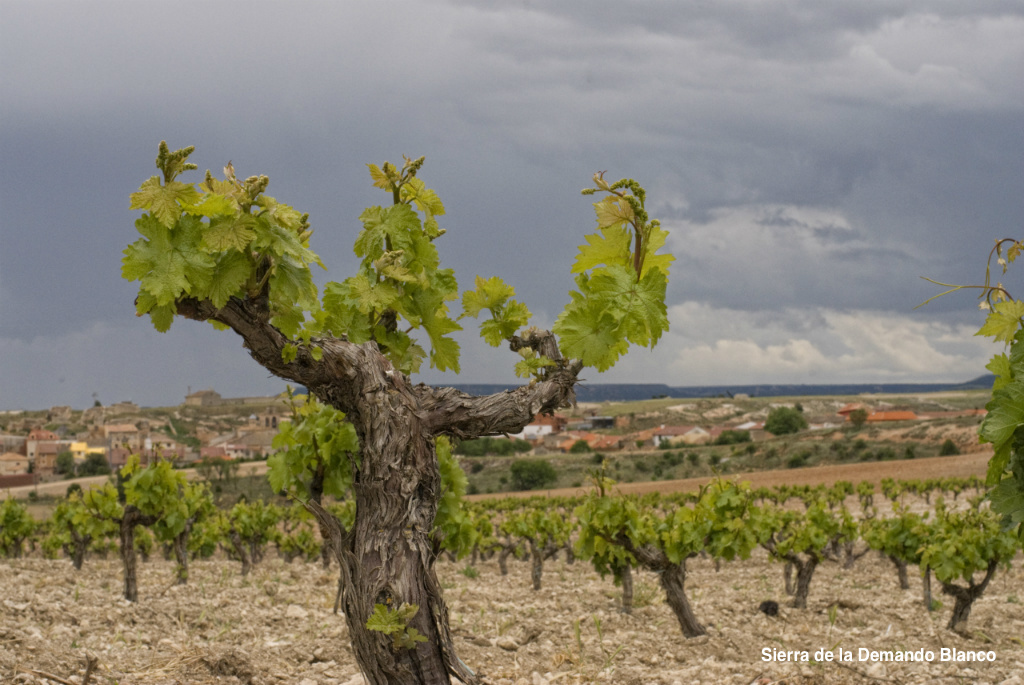
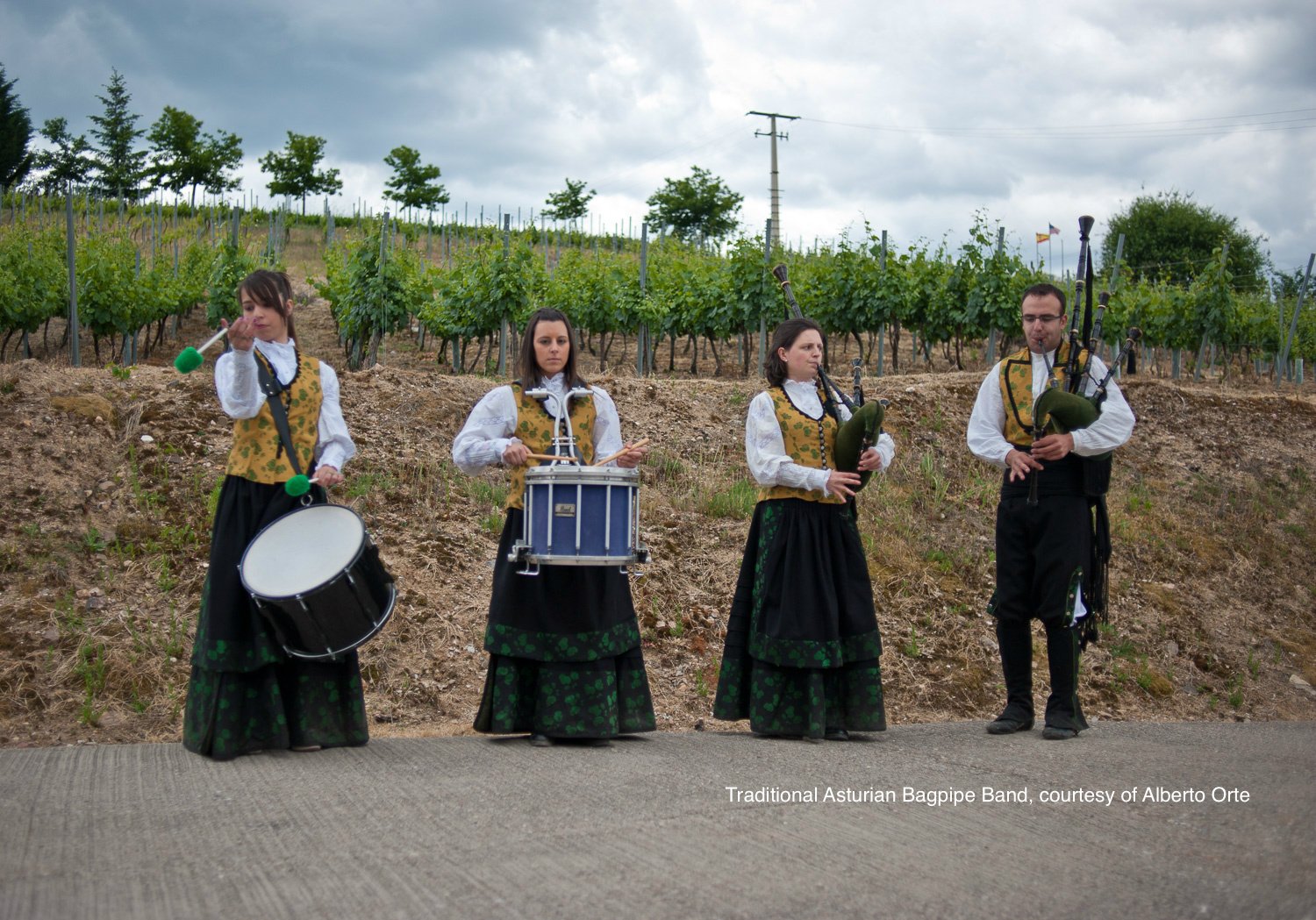
This month we have two Spanish wines from Olé & Obrigado, one made by Olé & Obrigado’s Alberto Orte, to whom we were introduced in the September club. To recap, here is the exact blurb from last month: Back in 1999, while still in college, Alberto and his friend Patrick Mata partnered to form Olé Imports, which became Olé & Obrigado. Both Alberto and Patrick are from families that have been making wine in Spain since the 1800s, so of course the first wines they sold in the U.S. were from Alberto’s family in Montilla, in southern Spain. The two still share duties, with Alberto handling the selection of wines and winemaking in Spain, and Patrick managing the commercial and marketing part of the business in the states.
Alberto has dedicated much of his life to discovering great Spanish terroirs, and rescuing and replanting ancient and nearly extinct varieties that would otherwise be lost. In Jerez alone, Alberto has identified 200+ old clones and 22 forgotten varieties. He produces wine in many regions throughout the Iberian Peninsula, most notably in Jerez, Valdeorras, and Rioja, and tends to favor high-altitude plots with deep soils. He practices organic and biodynamic farming in many vineyards, and has a passion for old vines, as the lower yields lead to more concentrated and complex flavors in the fruit. He produces two types of wines: wines of unique terroirs, which are labeled as Alberto Orte, and wines from village-designated vineyards that are more approachable, and are labeled as Vinos Atlántico. Today, Alberto owns 16 hectares of vines in Jerez and rents vineyard sites or purchases fruit in the Sil and Bibei riverbanks Valdeorras, Campo Arriba in Yecla, and Sierra de la Demanda in Rioja.
We hope you enjoy this selection! Happy Sipping!
Alberto Orte La Antigua Clásico Rioja Blanco 2018, Sierra de la Demanda, Spain $29.99
Last month’s club included La Antigua Clásico Reserva 2012, so we’re recycling the brief description of property/vineyards here. Additional notes can be found in the September club, which we’ll link to online.
La Antigua Clásico shows off the cool-climate, western mountain range of Sierra de la Demanda, a largely unexplored region south of the Ebro river in Rioja Alta. The vineyards here are sparsely scattered and extremely steep, making the terrain impossible to mechanize, thus all work must be done by hand. The north-facing, high-altitude vineyards also receive far less sunshine than those in the valley, so the grapes ripen slowly and are amongst the last to be harvested in all of western Europe; sometimes harvest doesn’t happen until early November. All of these factors, combined with Alberto’s winemaking style that harkens back to the early 20th century, come together to create wines of intense flavor, focus, and freshness, which lead to balanced, age-worthy wines.
This Rioja blanco is all heirloom clones (no purchased clones) of Viura (70%), Tempranillo Blanco (10%), and Garnacha Blanca (20%)–propagated via selección massale since 1965, and situated on the south banks of the Ebro, facing north, at 3000 feet above sea level. It’s fermented in oak (80% French/20% American) and partially aged under flor in an attempt to evoke Rioja Blanco from the time in the 19th and early 20th centuries when Fino or Manzanilla sherry was allowed in the blend to increase the body and texture. The result here is a wine that is rich but at the same time sinewy. On the nose there’s smoke, lemon, ginger, toasted bread, white flowers; the palate reflects the flor-aging with savory/umami notes that gives way to orchard fruit, delicate green herbs, and subtle hints of honey. The finish is long & graceful…but a little bit spicy too. Mike Smith, our local Olé & Obrigado representative, suggested pairing this wine with roasted chicken and butter braised fennel.
Señorío de Barahonda Monastrell 2020, Yecla, Spain $19.99
Yecla is the smallest and northernmost wine zone in the Murcia region, in southeastern Spain, and is surrounded by the more well-known regions of Jumilla, Alicante, and Almansa. The city and vineyards of Yecla are ringed by a series of low mountain ranges which help to give the region its particular microclimate (Mediterranean with a light Continental influence). Yecla is also one of the smallest wine zones in all of Spain, yet is dominated by the country’s largest co-operative, Bodegas La Purísima, which holds 60% (3325 Ha) of Yecla’s vines. In addition to being the smallest, it’s also one of Spain’s oldest wine regions, with a rich oenological history. Yecla was founded as the city of Yakka during the Moorish occupation of Spain (from the 8th to the 15th century), but winemaking predates the city by almost 1,000 years. Local lore suggest that the ancient Phoenicians brought wine grapes to Yecla, and archaeologists have discovered the ruins of a first-century wine cellar near Fuente del Pinar. After Roman rule ended in the 3rd century, wine production in Yecla continued, flourishing during the Moorish occupation and expanding as Spain's rulers consolidated their power. By the reign of King Philip II, Yecla was considered a major wine producing region. The Yecla DO includes two sub-regions: Campo Arriba and Campo Abajo. Campo Arriba lies north of the city of Yecla, with older vines and vineyards at higher elevations than those of Campo Abajo.
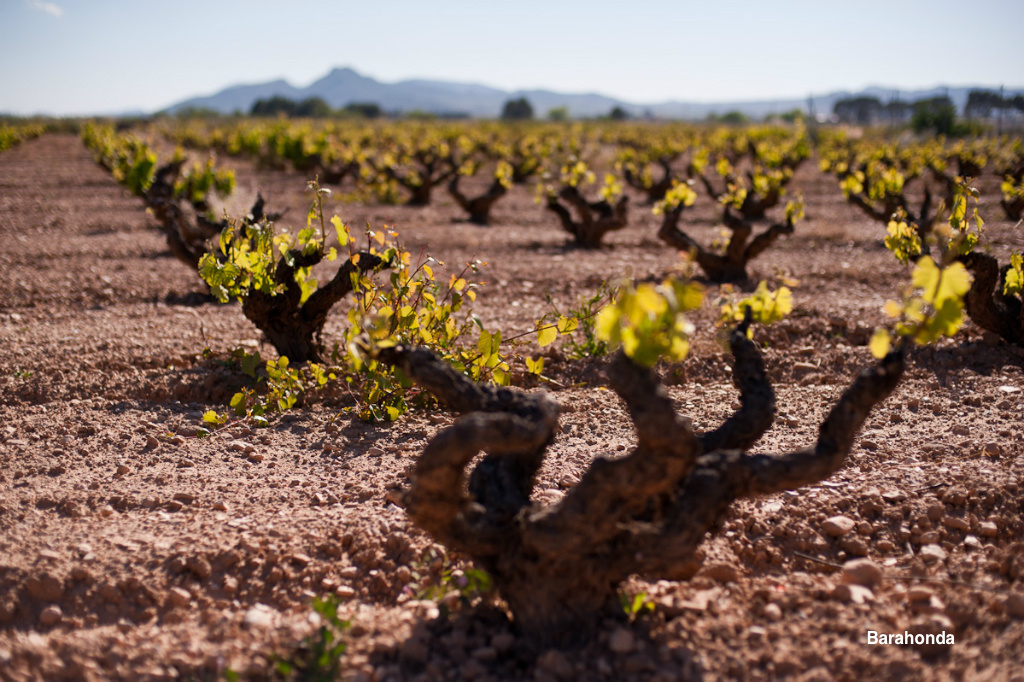
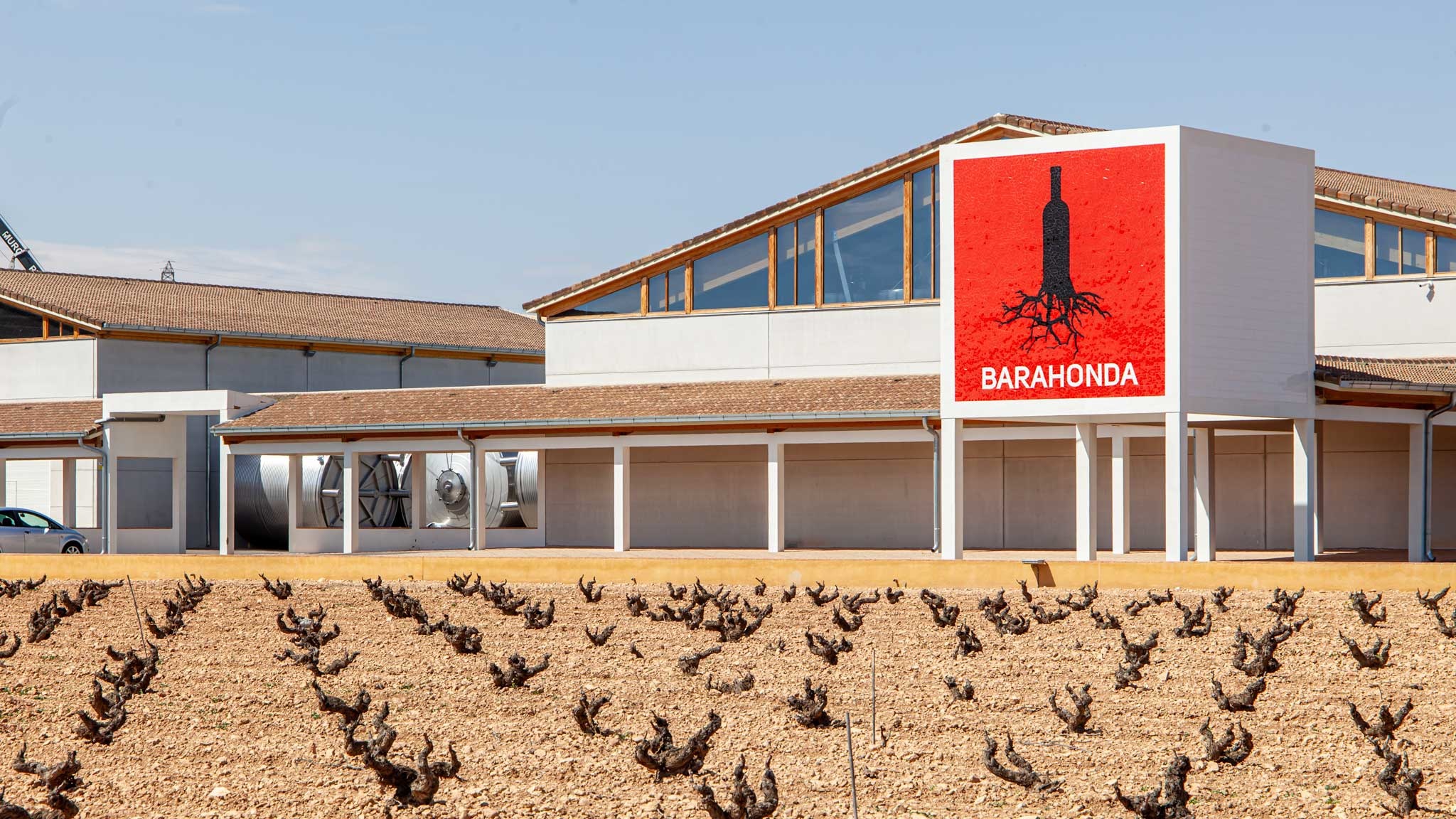
Señorio de Barahonda is the oldest family owned winery in Yecla, and much of their fruit is own-rooted. The Candela family established the winery in 1925, handing down their independent spirit through four generations. They believe that good wine is made in the vineyard; their 340 hectares (840 acres) planted on limestone soils are farmed organically and without additional irrigation despite the extremely hot and dry climate. The major grape here is the red Monastrell, a grape native to Spain that was brought to France around the 5th or 6th century and is today better known as Mourvédre. It is the main grape in Bandol, and is sometimes a close second to Grenache in Chateauneuf-du-Pape, if the site is warm enough.
This Monastrell is from vines planted between 1970 and 1980 on limestone, clay, and chalk, at 713m (2339 ft) elevation in the Campo Abajo (mainly white grape) subregion. It’s fermented and aged in stainless steel, never sees any oak. The goal of winemakers Augustin Carrion and Araceli Gonzalez Martinez (who both keep a low profile) is to show the unadulterated purity of the Monastrell grape and its potential in Yecla.
This is a full-bodied, smooth, and darkly fruity red—think blackberries and cherries with hints of licorice and cola. A little bit of baking spices and dried flowers add another layer to the fruit, and chewy tannins bring it all home. This is a satisfying fall/winter red for under 20 bucks. The pairing rec for this one is Kofte Lamb Kabobs with Spicy Harissa Yogurt Sauce for the carnivores, or Harissa White Bean Stew with Turmeric Yogurt for a vegetarian option. Turkish stuffed eggplant looks pretty tasty too, might have to experiment with that one. Or you could also go with fried cheese in Spanish tomato sauce, a specialty in Yecla!
Cheers!